Thermal Imaging Home Inspection Service

Thermal Imaging Home Inspection services are available across York Region, Durham Region, Kawartha Lakes And Peterborough 

Why Thermal Imaging Matters

Thermal imaging adds a diagnostic layer to a home inspection that visual observation alone cannot provide. Many building defects develop behind finished surfaces — inside walls, ceilings, floors, and electrical systems — where damage can progress long before visible symptoms appear.

Infrared thermography allows temperature anomalies to be identified in real time, helping reveal moisture intrusion, insulation gaps, air leakage, electrical overheating, and building envelope deficiencies that would otherwise remain hidden. This improves defect detection accuracy and reduces the likelihood of missed conditions during the inspection process.

Certified Thermal Imaging Inspection

Each thermal imaging inspection is performed by an ITC Level 1 Certified Thermographer trained in building diagnostics and infrared interpretation.

Certification ensures proper camera operation, thermal pattern interpretation, emissivity correction, and environmental condition awareness — critical factors that separate professional diagnostic imaging from basic “camera scanning.”

Thermal findings are documented with paired infrared and visual reference images, supporting clear reporting and defensible inspection observations.

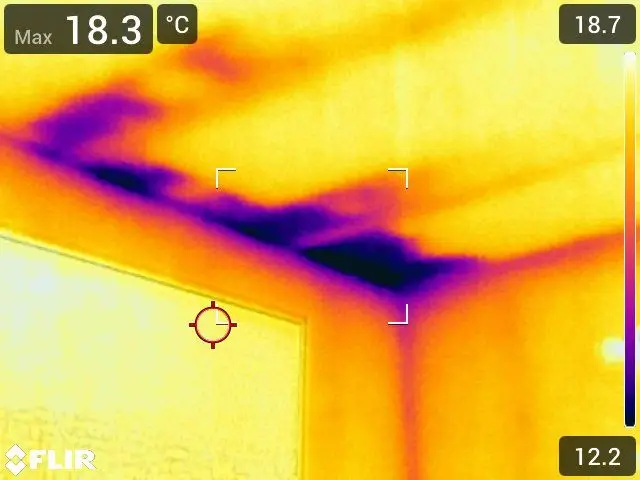
Insulation Voids detected in the ceiling .

undetected  insulation voids in ceiling .

Radian Floor Heating function verified.

unconfirmed radiant Floor heat

Thermal Imaging Is Included In Every Home Inspection

Thermal imaging is not treated as an optional add-on service. It is integrated into every residential inspection because of its value in identifying conditions that standard visual inspection methods cannot reliably detect.

By incorporating infrared scanning into critical inspection stages, hidden deficiencies can be identified earlier, allowing clients to make more informed property decisions.

This integration improves inspection depth without invasive testing or destructive access.

What Thermal Imaging Helps Identify

Infrared thermography is used as a screening and diagnostic support tool to help identify performance irregularities across multiple building systems.

Moisture Intrusion & Hidden Water Damage

Thermal patterns can reveal moisture accumulation behind drywall, ceilings, and finished surfaces that may not yet show visible staining.

Why this matters:
Undetected moisture can lead to mold growth, material deterioration, structural decay, and long-term repair costs if not addressed early.

Insulation Deficiencies & Thermal Bridging

Thermal imaging identifies insulation voids, compression, settling, and thermal bridging that reduce energy efficiency and comfort.

Why this matters:
Poor insulation performance increases heating and cooling costs and contributes to temperature imbalance and condensation risk.

Air Leakage & Building Envelope Gaps

Infrared scanning highlights uncontrolled air movement around windows, doors, wall penetrations, attic bypasses, and envelope transitions.

Why this matters:
Air leakage increases energy loss, moisture migration, and occupant comfort issues while accelerating building material wear.

Electrical System Overheating

Thermal imaging can identify abnormal heat signatures in electrical panels, breakers, connections, and high-load circuits.

Why this matters:
Overheating components can indicate loose connections, overload conditions, or developing failures that increase fire risk.

Radiant Heating & Mechanical System Performance

Infrared imaging helps verify radiant floor operation, heating distribution patterns, and abnormal temperature behavior in mechanical components.

Why this matters:
Uneven heating performance and mechanical inefficiencies can indicate system defects or operational issues requiring further evaluation.

Moisture Detection

When thermal imaging indicates potential moisture anomalies, readings are verified using professional moisture measurement tools to confirm the presence of elevated moisture levels.

This combined approach improves accuracy by separating thermal artifacts from true moisture conditions and strengthens reporting reliability.


What a Thermal Camera sees 

Serving Ontario's Thriving Communities